
A pioneering brain-computer interface (BCI) study conducted by UC Davis Health has captured the Herbert Pardes Clinical Research Excellence Award, a top honor in the field of clinical research. The research, led by Dr. David Brandman, co-director of the UC Davis Neuroprosthetics Lab, is heralded for its ability to restore speech capabilities to individuals who have lost the ability to communicate due to neurological disorders like amyotrophic lateral sclerosis (ALS).
Also interesting: Robotic Telework for Disabled People Serving as Waiters in Japan
The innovative BCI technology interprets brain signals generated when a person attempts to speak, converting those signals into text and vocalized speech using a computer. Implanted sensors in the brain are used to capture these signals, which are then processed by artificial intelligence (AI) algorithms to produce highly accurate, real-time communication. The study achieved a 97% accuracy rate in interpreting speech signals, setting a new benchmark for speech neuroprosthetics.

This breakthrough directly addresses the communication challenges faced by individuals affected by severe neurological conditions or paralysis. The ability to generate speech using recordings of the user’s voice adds a deeply personal and human element to the technology, setting it apart from earlier systems.
Brain tech is closer to science than to fiction
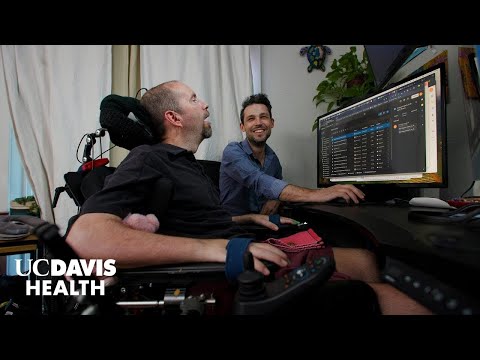
The first trial participant, a man with ALS, successfully used the system shortly after it was activated to communicate his thoughts aloud. The technology restores more than just speech; it offers hope, connection, and the ability to participate more fully in everyday life, including maintaining personal relationships and potentially remaining engaged in work.

The study’s recognition highlights its transformative impact on clinical neuroscience, offering new hope for individuals with communication disabilities. By restoring a voice to those who have lost it, the technology marks both a groundbreaking technological achievement and a shift in the treatment of speech impairments.
Before you go: Using the Brain to Control Digital Technology
“The work done by Dr. Brandman and his team, including his research partner Sergey Stavisky, has been nothing short of remarkable,” said Kim E. Barrett, a distinguished professor at UC Davis. “The technologies they have developed offer real hope to change the lives of those who have been robbed of their power to speak intelligibly by diseases such as ALS.” This innovation represents a turning point in addressing the challenges faced by individuals with conditions like ALS, redefining what is possible in the field of communication and neuroscience.
YouTube: New Brain-Computer Interface (BCI) Allows Man with ALS to ‘Speak’ Again Using Brain Implant and AI
By clicking play, you agree to YouTube's Terms of Service and Privacy Policy. Data may be shared with YouTube/Google.
Photo credit: The material shown is owned by UC Davis and was used with permission.
Source: UC Davis news
